The food business in Dubai is evolving rapidly. While traditional restaurants still dominate prime locations, a quieter but faster growing model has emerged as one of the most profitable opportunities in the city. Cloud kitchens.
By 2026, cloud kitchens are no longer an experiment in Dubai. They are a proven, scalable business model driven by changing consumer behavior, strong delivery infrastructure, and a city that thrives on convenience.
For entrepreneurs looking to enter the food and beverage industry with lower risk, controlled costs, and higher scalability, starting a cloud kitchen in Dubai in 2026 presents a compelling opportunity.
This guide breaks down everything a founder needs to know to launch a cloud kitchen in Dubai, from planning and licensing to operations, marketing, and scaling.
Understanding the Cloud Kitchen Model
A cloud kitchen is a food business that operates without a dine in space. Orders are placed through online delivery platforms or direct channels and prepared in a centralized kitchen facility.
This model eliminates many of the fixed costs associated with traditional restaurants such as premium locations, front of house staff, and elaborate interiors.
In Dubai, where delivery culture is strong and consumers are comfortable ordering food online multiple times a week, cloud kitchens align perfectly with market demand.
Why 2026 Is the Right Time to Launch
Several factors make 2026 an ideal year to start a cloud kitchen in Dubai.
Consumer demand for delivery continues to grow as busy lifestyles increase reliance on convenience
Food delivery platforms have matured, offering better logistics and wider customer reach
Regulations are clearer and more structured for delivery only food businesses
Shared kitchen infrastructure has expanded, reducing setup costs
Dubai’s population continues to grow with a high proportion of young professionals
These conditions combine to create a low entry, high potential environment for food entrepreneurs.

Choosing the Right Business Structure
Before cooking begins, founders must choose the correct business structure.
In Dubai, cloud kitchens can be set up as mainland companies or within certain free zones, depending on the operational model.
A mainland setup is generally preferred for food businesses that plan to work extensively with delivery platforms and local suppliers. It also allows greater flexibility in operations and expansion.
Free zone setups may work for central kitchen models or brands operating multiple delivery only concepts, but operational permissions must be evaluated carefully.
Choosing the wrong structure can limit growth, so this decision should be made early and strategically.
Selecting the Right Trade Activity
When applying for a license, the selected trade activity must clearly align with food preparation and delivery.
Dubai authorities are strict about food related activities. A cloud kitchen license typically falls under food preparation, catering, or restaurant related activities with delivery permissions.
It is essential that the activity allows cooking, packaging, and delivery, not just trading or reselling.
Clear alignment between operations and license activity avoids compliance issues later.
Finding the Right Kitchen Location
Location matters even for delivery only businesses.
A cloud kitchen should be located close to its target customer base to reduce delivery times and platform penalties. Areas with high residential density and strong delivery demand are ideal.
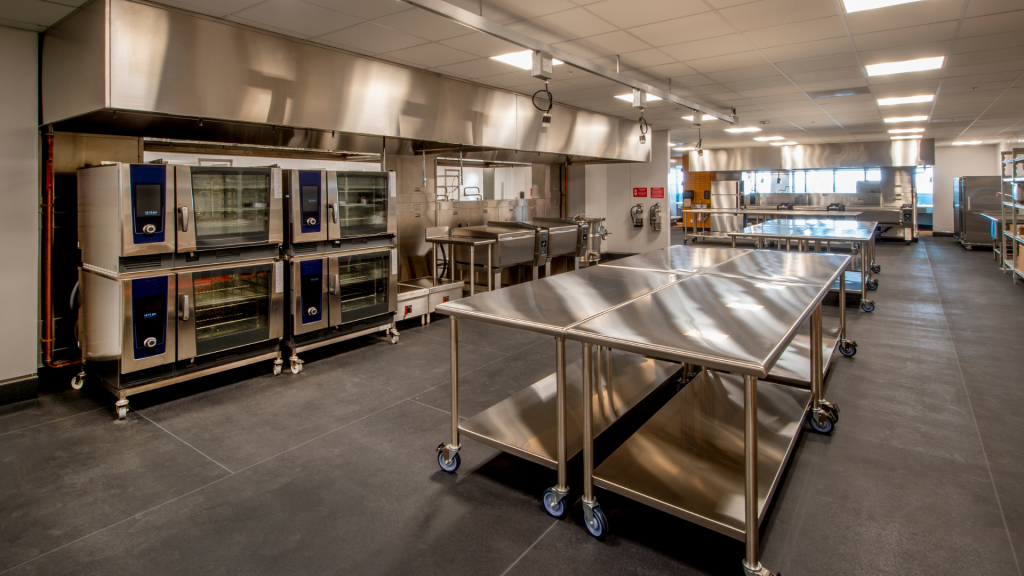
Dubai offers several shared kitchen facilities designed specifically for cloud kitchens. These spaces provide licensed kitchens, cold storage, ventilation, waste management, and sometimes staff facilities.
Using a shared kitchen significantly reduces startup costs and speeds up launch timelines.
Alternatively, entrepreneurs with larger budgets can build their own kitchen facility, but this requires higher capital and more regulatory approvals.

Kitchen Fit Out and Equipment
Whether using a shared kitchen or a private facility, compliance with Dubai Municipality food safety standards is mandatory.
This includes:
Proper ventilation and exhaust systems
Food grade surfaces and equipment
Cold storage and dry storage separation
Waste disposal systems
Fire safety measures
Equipment should be selected based on menu requirements. Over investing early can strain cash flow, while under investing can affect quality and consistency.
A lean but efficient setup is ideal for the first six to twelve months.
Food Safety and Compliance Requirements
Food safety is taken seriously in Dubai.
All food businesses must register with the food safety system and follow strict hygiene standards. Staff handling food must have valid health cards and food safety training.
Regular inspections ensure compliance. While this may seem demanding, it actually builds trust with customers and delivery platforms.
Entrepreneurs who prioritize compliance from day one avoid costly penalties and operational disruptions.
Menu Design and Brand Positioning
The success of a cloud kitchen is heavily influenced by menu strategy.
In Dubai, customers favor cuisines that travel well, maintain quality during delivery, and offer consistent flavors. Overly complex menus often lead to operational inefficiencies.
A focused menu with a clear brand identity performs better than trying to serve everything.
Many successful cloud kitchens operate multiple virtual brands from the same kitchen, each targeting a different cuisine or customer segment. This allows founders to test concepts without opening separate locations.
Branding matters even without a physical storefront. Names, packaging, and presentation influence ordering decisions.

Working With Food Delivery Platforms
Delivery platforms are the lifeline of cloud kitchens.
Registering with multiple platforms increases reach, but it also increases commission costs. Founders must factor platform fees into pricing strategy.
High quality food photos, accurate descriptions, and consistent ratings drive visibility on these platforms.
Delivery times and order accuracy are critical. Poor performance can reduce platform ranking, directly impacting sales.
Over time, successful cloud kitchens also build direct ordering channels to reduce dependency on platforms and improve margins.
Pricing Strategy and Profit Margins
Pricing in Dubai’s food delivery market is competitive.
Founders must balance affordability with profitability. Pricing should account for:
Ingredient costs
Kitchen rent or shared space fees
Staff salaries
Platform commissions
Packaging and logistics
Marketing expenses
Cloud kitchens benefit from lower overhead compared to restaurants, but margins can still be thin if pricing is not planned carefully.
Regular cost analysis and menu optimization help protect profitability.
Staffing and Operations
A cloud kitchen requires fewer staff than a traditional restaurant, but the team must be efficient.
Key roles include:
Kitchen staff for food preparation
A supervisor or kitchen manager
Support staff for cleaning and inventory
Many early stage cloud kitchens start with a small team and scale as order volume increases.
Clear standard operating procedures ensure consistency, speed, and quality, which are essential for repeat business.

Marketing a Cloud Kitchen in Dubai
Marketing is often overlooked by food founders, but it plays a major role in success.
In Dubai, digital marketing channels such as social media, influencer collaborations, and delivery platform promotions drive visibility.
Promotions, limited time offers, and combo meals help attract first time customers. Consistency and quality turn them into repeat buyers.
Customer reviews matter. Encouraging satisfied customers to leave reviews improves platform ranking and credibility.
Brand storytelling also plays a role. People like ordering from brands with personality and purpose.
Managing Costs and Cash Flow
Cash flow management is critical in the first year.
Initial months may involve experimentation, promotions, and adjustments. Founders must plan reserves to handle fluctuations.
Tracking daily sales, expenses, and inventory helps prevent wastage and over ordering.
Cloud kitchens that monitor data closely adapt faster and survive longer.
Scaling Your Cloud Kitchen Business
Once the model is proven, scaling becomes easier.
Options for scaling include:
Launching additional virtual brands
Expanding into new delivery zones
Opening multiple kitchen locations
Franchising successful concepts
Dubai’s infrastructure supports rapid expansion when systems are in place.
Scaling should be intentional, not rushed. Strong fundamentals must come before aggressive growth.
Common Mistakes to Avoid
Many cloud kitchens fail due to avoidable mistakes.
Over complicating the menu
Ignoring compliance requirements
Underestimating platform commissions
Poor branding and packaging
Lack of cost control
Learning from existing market failures can save significant time and money.
Why Dubai Is Ideal for Cloud Kitchens
Dubai offers a unique combination of factors that support cloud kitchen success.
High delivery adoption
Diverse food preferences
Strong logistics infrastructure
Clear regulatory systems
A growing population with disposable income
Few cities offer all these advantages simultaneously.

Final Thoughts
Starting a cloud kitchen in Dubai in 2026 is one of the most accessible entry points into the food business.
Lower startup costs, flexible scaling, and strong consumer demand make it attractive for both first time founders and experienced operators.
Success depends on planning, execution, and adaptability rather than large capital investments.
For entrepreneurs willing to build systematically, focus on quality, and understand the local market, a cloud kitchen in Dubai is not just a food business. It is a scalable brand opportunity.
The opportunity is real.
The market is ready.
The only question is whether you are prepared to execute.